 Services
Pressure Washing
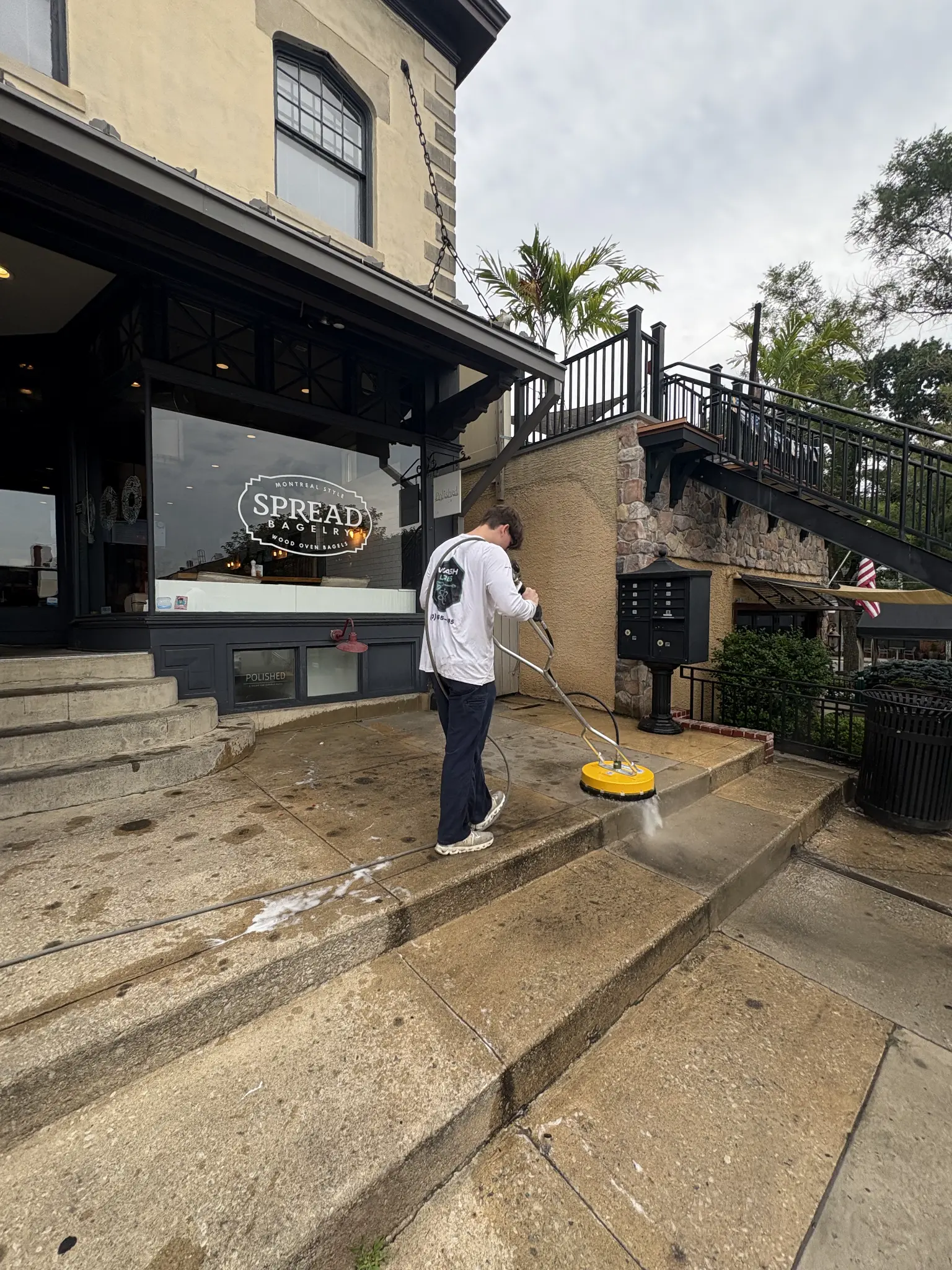
High-pressure cleaning for concrete, brick, stone, and metal. Drone-delivered up to 190 feet, up to 4,000 PSI. Free quote in 24 hours.
What Is Pressure Washing?
Pressure washing uses a water jet of up to 4,000 PSI to strip dirt, mold, oil, and embedded grime off hard surfaces. The water does the work, not a cleaning chemical. That makes it the right tool for concrete, brick, poured stone, and metal. Those surfaces are built to take direct force.
By drone, the same cleaning power reaches a multi-story facade, a parking garage deck, or a warehouse wall. Nobody sets up scaffolding or a boom lift, and nobody works at height. Our FAA Part 107 certified pilots fly the wand where a ladder or lift used to go. A job that took a scaffolding crew days is usually done in an afternoon.
Applications
| Surface Type | Why This Service Works |
|---|---|
| Concrete | Handles oil stains, tire marks, and years of embedded grime without surface damage. |
| Brick | Removes efflorescence, moss, and pollution staining while preserving mortar joints. |
| Stone | Restores natural stone facades and retaining walls to their original appearance. |
| Metal | Strips rust, oxidation, and paint from steel and aluminum surfaces. |
| Parking Garages | Removes oil, rubber, and road salt buildup from multi-level structures. |
What pressure washing should not touch
High pressure is the wrong tool on soft or porous material. Stucco, EIFS, and any wall built on lime mortar fail under a pressure wand. Many of the older stone houses on the Main Line are lime mortar. The water drives past the finish and into the wall instead of staying on the surface. Cedar shake and painted wood siding blister and splinter the same way.
This is a safety distinction. If your property has stucco, stone with old mortar, cedar, or painted siding, the correct method is soft washing. Soft washing uses a cleaning solution at low pressure instead of force. We offer both. We will tell you which one your building needs, and we do not pick by which equipment is already on the truck.
How drone delivery changes the job
A conventional crew reaches height with a ladder, a boom lift, or scaffolding. Each takes time to set up, each needs a clear path to the building, and each puts a person at height. A drone carries the same pressure washing attachment up to 190 feet and is in the air within the hour. That is why a job that used to take days of scaffolding setup is usually finished in one visit.
It also changes what we can reach. The upper deck of a parking garage, the top of a warehouse wall, or a loading dock canopy are all in reach without a lift on pavement that has to stay open. Ground crews still handle lower walls, walkways, and anything a wand covers faster on foot. The drone takes the parts of the job that otherwise need an equipment rental.
What drives the price
Three things set the cost of a pressure washing job: the square footage, the condition of the surface, and the access. A lightly soiled concrete pad costs less than a facade with years of oil stains or embedded efflorescence. Heavier buildup needs more passes, and sometimes a pre-treatment before the wand gets there.
Access matters almost as much as square footage. A ground-level driveway or patio is the simplest configuration. A multi-story facade costs less by drone than it does with a lift or scaffolding. We still price it by the actual height and complexity of the building. Use the calculator above for a ballpark. We give a firm number after we see the property.
How often, and what to expect on the day
Most commercial concrete, brick, and metal surfaces hold up well on a yearly cycle. Properties near a busy road or with heavy pollution exposure need it more often. So does any surface with constant oil or tire residue, like a parking garage or loading dock. Those usually need attention every six months, before the grime builds back up.
On the day, we walk the property first. We check access points and protect anything near the work: plants, vehicles, HVAC intakes. We set up wastewater containment to meet local runoff rules before any surface gets wet. The drone or wand work is usually the fastest part of the visit. We finish with a walk-through so you can point out anything before we leave.
Our Process
Property Assessment
We check the surfaces, the access points, and the grime level, then set the PSI and the method.
Area Preparation
We protect landscaping, seal drains if needed, and set up containment for wastewater compliance.
Drone Deployment
Our FAA-certified pilots deploy commercial drones with pressure washing attachments up to 190 feet.
Quality Inspection
Walk-through with you to confirm results. We don't leave until the job meets our standards.