 Services
Drone Window Cleaning
Streak-free window cleaning by drone for homes and high-rises up to 190 feet. No scaffolding, no rope access. Free quote in 24 hours.
What Is Drone Window Cleaning?
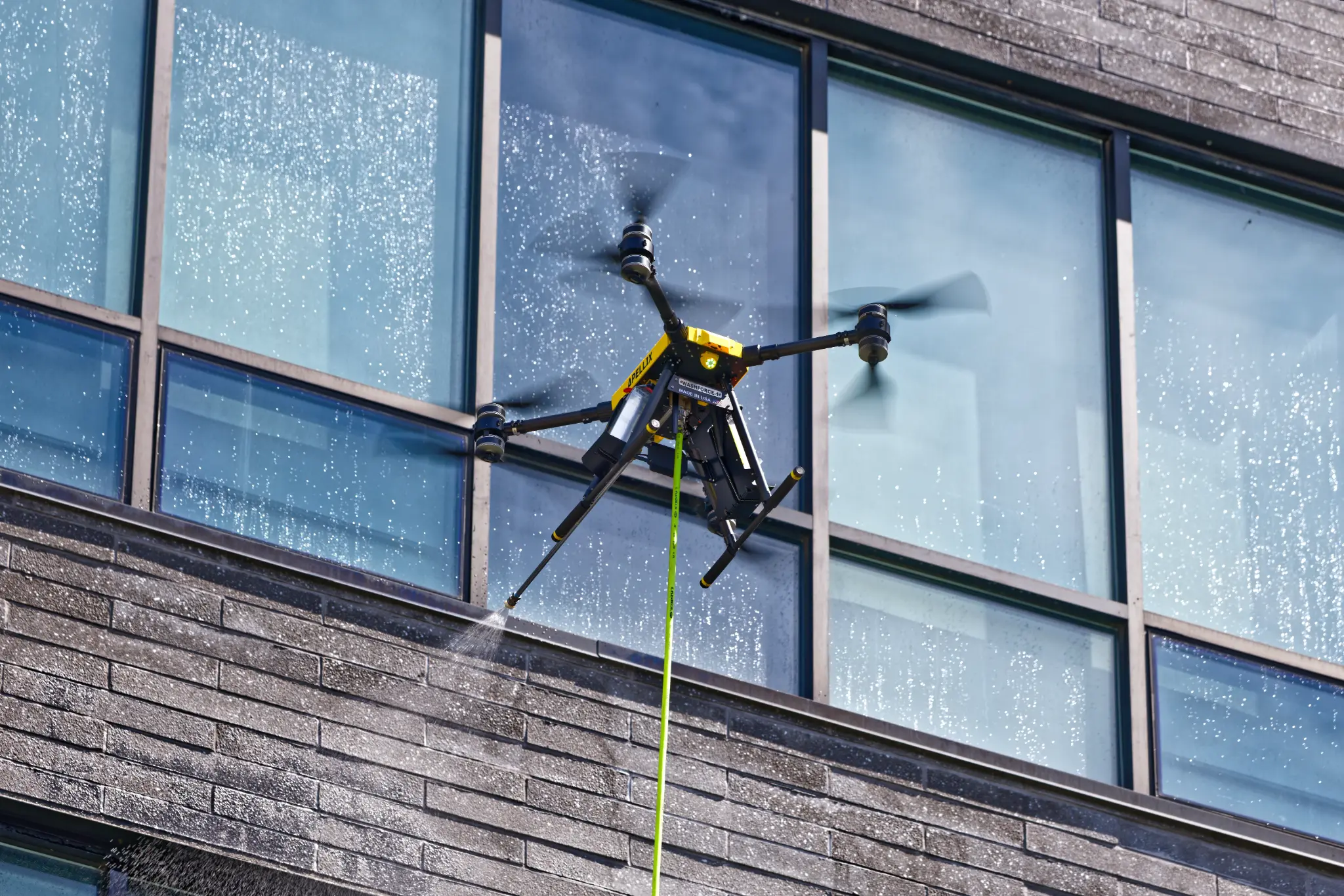
Drone window cleaning replaces the ladder, the water-fed pole, or the rope access rig with a drone that carries a purified-water attachment. The water is filtered until it has no dissolved minerals left, so it dries clear without a squeegee pass. That holds from a second-story dormer window to a fifteen-story curtain wall.
Purified water is what makes the streak-free result possible. Tap water leaves mineral deposits as it dries. That is why conventional window cleaning depends on a squeegee to pull each drop off before it evaporates. The drone applies purified water at low pressure, covers the glass evenly, and lets it dry on its own.
Applications
| Surface Type | Why This Service Works |
|---|---|
| Commercial Glass | Purified water leaves zero residue or streaks on standard commercial glazing. |
| Tinted Windows | Low-pressure application is safe for tinted and coated glass surfaces. |
| Curtain Wall Systems | Drone access removes the need for a swing stage on a curtain wall facade. |
| Skylights | Safely cleans overhead glass that's difficult to reach by any other method. |
| Storefront Glass | Quick, efficient cleaning for retail and ground-floor commercial windows. |
Where drones replace rope access and scaffolding
Conventional high-rise window cleaning means a rope access team, a swing stage, or a building maintenance unit. Each takes setup time and puts a person at height over an occupied property. A drone reaches the same glass in the time it takes to walk the property. Nobody hangs above the sidewalk or the lobby entrance.
It does not replace every method. Interior glass, windows behind fixed screens, and some ground-floor storefront work still get done by hand or by a partner we trust. The drone changes everything above the reach of a water-fed pole. That used to mean scaffolding or a rope crew. Now it means a pilot on the ground and a machine in the air.
What drives the price
Pane count, glass type, and building height set the cost. A tinted or coated curtain wall gets the same low-pressure purified water as standard glazing, but more panes and more height add time. Buildings over four stories show the clearest savings by drone. That is the height where rope access or a lift otherwise becomes part of the quote.
For a home, the comparison is simpler. A single-story house with standard windows is the least expensive configuration. Second-story or skylight glass that otherwise needs a ladder against the gutter costs less by drone. Either way, we quote from an actual pane count and a look at the building.
How often, and what to expect on the day
Most commercial buildings hold their appearance on a twice-yearly schedule. Hotels, restaurants, and other guest-facing properties often clean quarterly, because exterior glass is part of the first impression. Homes usually need it once or twice a year, and more often under heavy tree cover where pollen and sap collect on the glass.
On the day, we count the panes, note any coating or tint, and check access before the flight. The drone applies purified water at controlled pressure to each pane. Ground crews handle anything within reach of a pole. We do a spot check afterward and fix any missed pane before we leave.
Our Process
Window Assessment
We count panes, identify glass types, and note any coatings or tinting that affect our approach.
Water Purification
We use a multi-stage filtration system to produce pure water that dries without spots or streaks.
Drone Cleaning
The drone delivers purified water at controlled pressure to each pane.
Spot Check
We inspect each window we can reach and fix any missed spot before we leave.