
The best time to pressure wash a house on the Main Line is late May into June. The spring tree pollen has ended, and the humid months have not yet fed new algae. Early fall, from September into October, is the second window. Plan a full house wash at least once every two years. Shaded north walls under tree canopy can need it sooner. One correction to the question: siding gets a low-pressure soft wash. High pressure is for concrete and stone.
Why late spring is the first choice
Two things line up at the end of May. The pollen is mostly down, and the surfaces are dry and warm, so a cleaning solution can do its work before the summer growth starts.
Pollen sets the earliest useful date. Tree pollen in southeastern Pennsylvania runs from about late March into June. Clean the house in April and a new yellow film can coat it again within days. The details of how pollen settles on siding, screens, and decks are in our guide to seasonal pollen on Pennsylvania home exteriors.
Winter also leaves work behind. Splash from salted roads and driveways marks the bottom course of siding and the base of brick and stone. Green growth on north walls survives the winter and starts to spread again with the first warm, wet weeks. A clean in late spring removes both before July and August, when the humidity is highest and growth on shaded walls is fastest.
Why early fall is the second choice
September and early October are the right time if you missed spring. They are also the second visit for a house under heavy canopy that needs two cleanings a year.
By late summer, algae and mildew are at their worst on the north side and under trees. A fall clean removes them before winter. Growth left on the siding holds water against it through the cold months.
The fall window closes before the calendar does. Cleaning solutions have a temperature floor, and cold nights slow the drying. On concrete, water that soaks into cracks and joints and then freezes can widen them. Plan any driveway or walkway work well before the first hard freeze.
Leaves add one more timing question. Clean the gutters after the leaves are down, which here often means late November, because oaks hold their leaves late. The siding can be done earlier. Our fall exterior maintenance checklist puts the gutter, roof, and hardscape work in order.
When not to schedule it
- Peak pollen, April into May. The film comes back within days.
- Midday on a sunny south or west wall in July. The solution dries before it works and can leave streaks.
- A windy day. Spray and solution drift onto plants, cars, and the house next door.
- The week of a hard freeze. Water in concrete joints and on walks turns to ice.
- During heavy rain. Rain during the application dilutes the solution before it works. Light rain after the work is usually fine, and our guide on what rain means for your cleaning appointment explains why.
What time of day works best?
Morning. Start on the shaded side and follow the shade around the house, so no wall is cleaned in direct afternoon sun. The cleaning solution stays wet long enough to work, and the rinse does not dry into spots before the next section.
Plan for drying time if paint or stain comes next. Clean first, then let the wall dry fully before anyone paints. The paint label gives the minimum wait. Shaded walls and cool, damp weeks dry slower than the label assumes.
For the yard work before the visit, see how to prepare your yard before house washing day.
How often should you pressure wash your house?
At least once every two years for a house wash. Shaded or tree-covered walls can need it sooner, sometimes each year. The surface decides the method and the interval:
| Surface | Method | Typical interval |
|---|---|---|
| Vinyl siding | Soft wash | At least every 2 years, sooner on shaded walls |
| Stucco or EIFS | Soft wash only | At least every 2 years |
| Cedar or painted wood siding | Soft wash | At least every 2 years, after you check the paint |
| Painted brick | Soft wash | At least every 2 years |
| Concrete driveway and walks | Pressure washing | No fixed interval. Clean when stains or algae come back, sooner under trees |
| Shaded walks and steps with algae | Pressure washing | Once a year, before the algae makes them slippery |
| Asphalt shingle or slate roof | Soft wash, never high pressure | When black streaks or moss show |
North walls and any wall under oak or tulip poplar canopy stay damp longer, so they grow algae first. Look at those walls in spring. If they are green, the house is due.
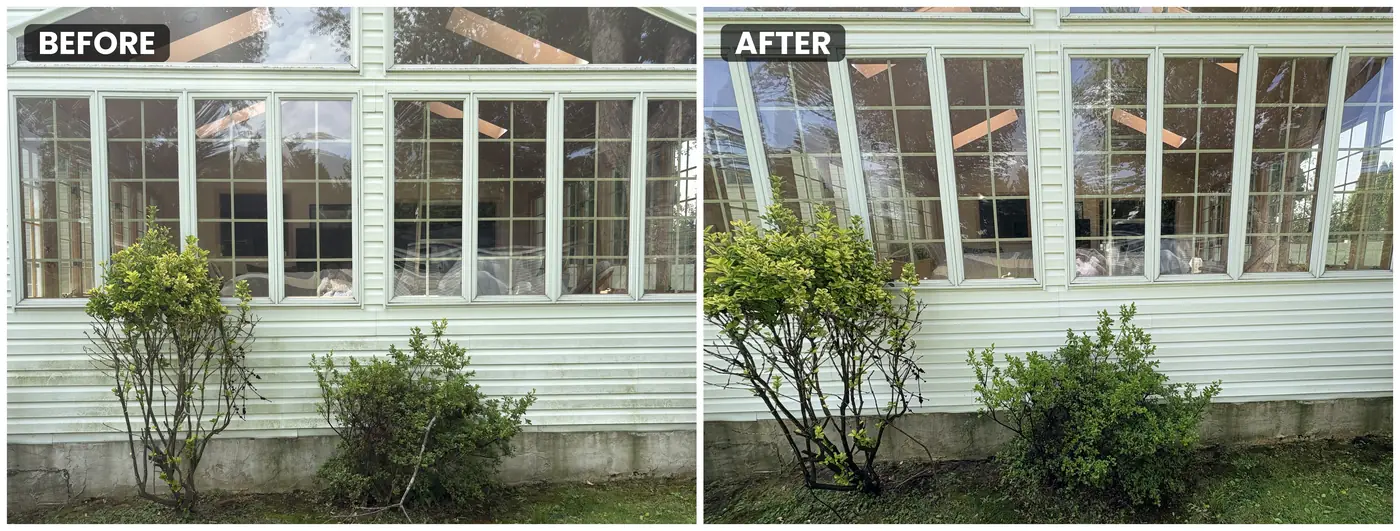
Two guides cover the surfaces that go wrong most frequently: vinyl siding cleaning mistakes to avoid and how to clean cedar siding without trapping moisture. Shaded walks have their own guide: how to clear algae from shaded walkways.
Where pressure washing is the wrong tool
Most of the house is not a pressure washing job. Each rule below is a prohibition, then what goes wrong.
- Do not pressure wash vinyl siding at close range. High pressure drives water up behind the laps and into the wall.
- Do not pressure wash stucco or EIFS. Pressure can gouge the finish and push water into the wall system behind it.
- Do not pressure wash an asphalt shingle roof. High pressure removes the granules and shortens the life of the roof.
- Do not use high pressure on lime mortar in pre-war stone walls. Soft mortar washes out of the joints. See how to protect natural-stone walls and mortar.
- Do not pressure wash flaking paint on a house built before 1978. Homes from before 1978 can have lead paint, and a high-pressure spray puts the chips into the soil around the house. Test the paint first.
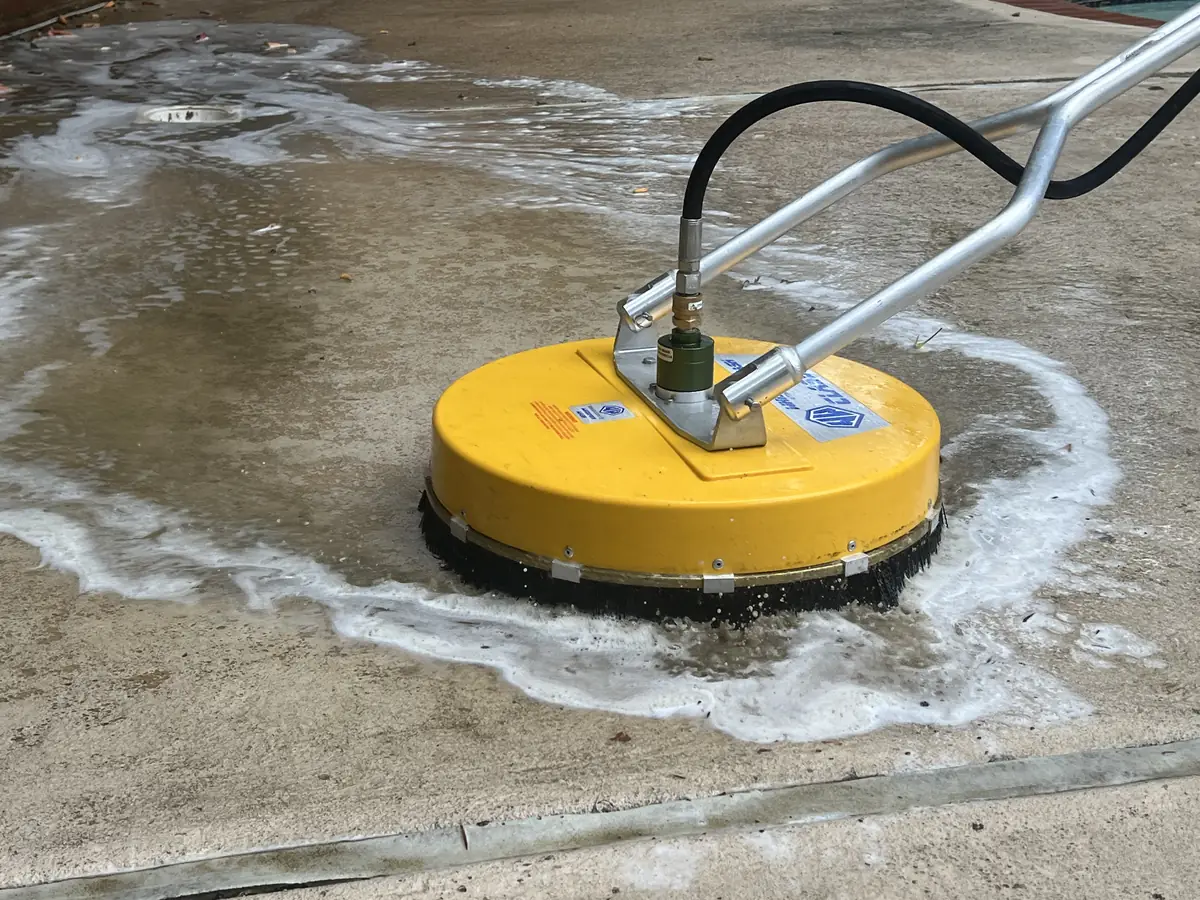
Our equipment reaches 4,000 PSI. That pressure is for concrete flatwork such as driveways, walks, and pool decks, under a surface cleaner that keeps the spray contained. Siding, stucco, and roofs get a low-pressure soft wash, and the cleaning solution does the work. The difference is explained in soft washing vs pressure washing.
What a regular clean costs
Published rates are $0.25 to $0.55 per square foot for pressure washing and $0.35 to $0.70 per square foot for soft washing. The pricing page has the full list. Where a job falls in the range depends on four things: the buildup, the wall height, the access around the house, and the number of surfaces. Light buildup takes less time than heavy buildup. Thus a house cleaned at least once every two years usually sits lower in the range than one that waited four or five years.
On every house we wash, the north wall and the walls under large trees carry the most growth, so they take the most time. We soak the plants along those walls with water before the solution goes on, and we rinse them again after.
For concrete, brick, and stone, see pressure washing. For siding and the full house exterior, see house washing.
Text a photo of the house to (610) 665-3995. We reply within 24 hours.