
The safe method of roof moss removal is to kill the moss with a cleaning solution. Rain then carries the dead moss off the roof over the next weeks. Do not scrape the moss off and do not pressure wash it. Both methods pull the granules off asphalt shingles and shorten the life of the roof. At WashLabs, roof cleaning on a house typically costs $500 to $1,000.
Why moss on a roof is a problem
Moss holds water like a sponge. It grows in the gaps between shingles and pushes its roots under the shingle edge. As the moss gets thicker, it lifts the edge. Wind then drives rain under the lifted shingle and onto the roof deck.
On the Main Line, moss grows most on north slopes and on slopes under oak and tulip poplar canopy. Those slopes stay wet for days after a rain. A roof can look clean from the driveway and carry thick moss on the back slope that nobody sees.
Moss is not the black streaking that runs down many roofs. That streaking is algae, and lichen is a third growth with its own problems. To tell the three apart from the ground, read how to identify roof algae, moss, lichen and black streaks. This article is about what to do once you know it is moss.
Why you must not scrape or pressure wash moss off shingles
An asphalt shingle has a top layer of ceramic-coated granules. The granules block sunlight from the asphalt under them. When the granules come off, the sun dries and cracks the asphalt, and the shingle fails early.
Scraping, brushing and pressure washing all remove granules. The Asphalt Roofing Manufacturers Association says it plainly in its algae discoloration guidance: "DO NOT use a power washer or any type of brush or broom to clean algae from the roof surface." The same page says to avoid scrubbing, "as this friction may loosen and remove granules." For moss, it tells you to consult the shingle manufacturer.
There is a second problem with a pressure washer on a roof. The spray drives water up under the shingle laps, which is the same damage the moss does, only faster. If you find a heavy layer of granules in the gutters after someone cleaned the roof, the roof lost part of its life that day.
Slate and cedar have their own limits. Slate cracks under a person's weight, and a cracked slate is a repair, not a cleaning. Cedar shakes are soft wood, and high pressure tears the fibers. For slate, read why slate roof cleaning takes a different approach.
How to remove moss from a roof safely
This is the safe homeowner method for a one-story roof with a low slope. It works more slowly than a scraper, but it does not damage the shingles.
- Stay off the roof. ARMA warns that "it is dangerous to walk, climb, or work on a roof." Work from the ground or from a ladder at the eave.
- Soak the plants under the roof edge with water. A roof treatment that drips onto dry leaves can burn them.
- Apply a moss treatment that is labeled for use on roofs. Follow the label for the mix and the dwell time. Do not mix two products.
- Rinse the plants again with water when you finish.
- Wait. The moss turns brown as it dies, and it lets go of the shingles. Rain washes most of it off over the next weeks.
- If loose clumps stay, rinse them with a garden hose aimed down the slope. Never aim the water up the slope, because it goes under the shingles.
- Clean the gutters after the moss comes off. Dead moss collects in the trough and blocks the downspouts.
Two changes make the moss grow back more slowly. Trim the branches that hang over the roof, so the sun and the wind can dry the shingles. And ask your roofer about a zinc or copper strip at the ridge. Rain carries a small amount of the metal down the roof, and moss grows less where it flows.
Stop and hire when the roof is two stories or more, when the pitch is too steep to stand on, when the roof is slate or cedar, or when the moss is thick enough to lift the shingle edges.
How a soft wash removes roof moss
A soft wash is the professional form of the same method. A cleaning solution goes onto the roof at low pressure. It stays on the moss for a set dwell time and kills it. Then a light rinse at low pressure takes off the loose growth. The rest of the dead moss lets go over the next weeks of rain.
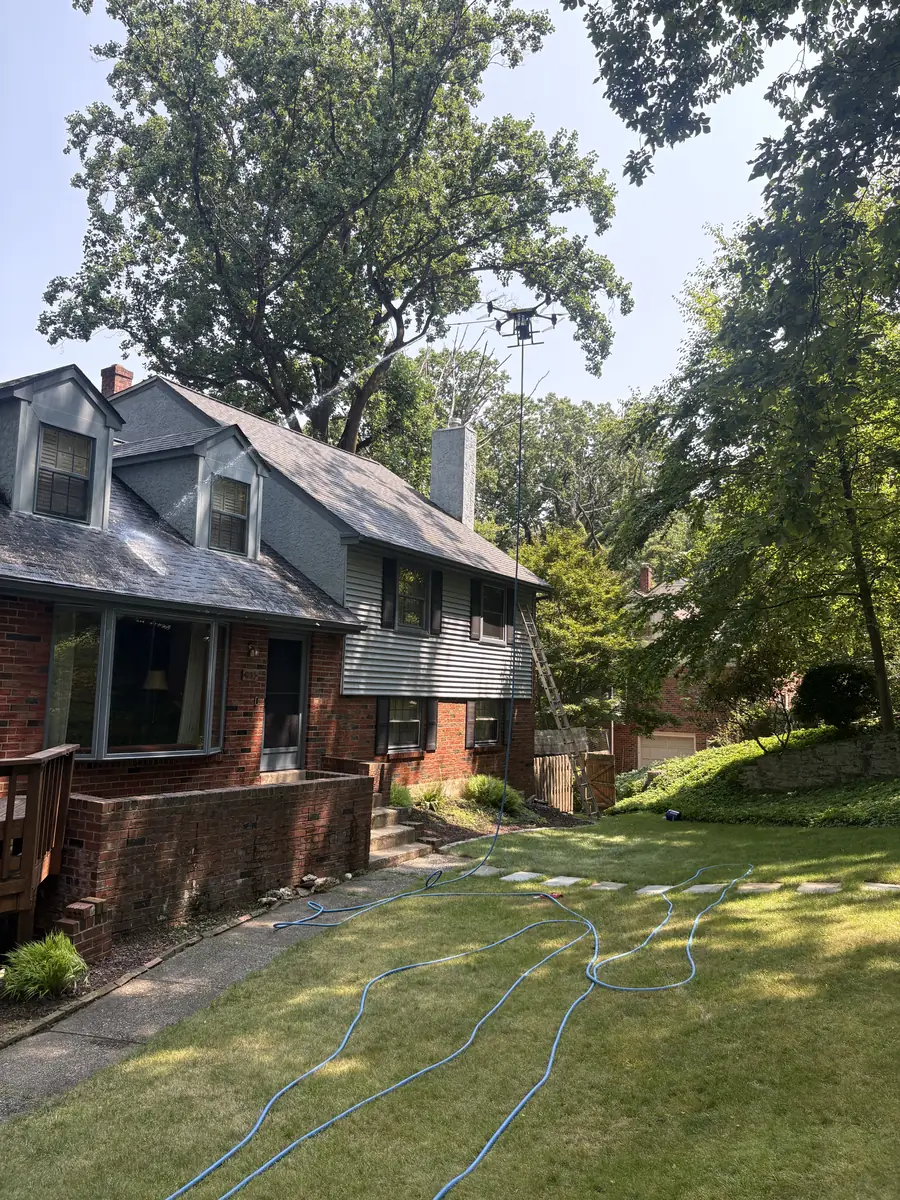
WashLabs puts the solution on from a drone above the roof. Nobody walks on the shingles or the slate, and nobody leans a ladder on the gutter. The drone reaches 190 feet, and the pilots hold FAA Part 107 certification.
On every roof we clean, the north side and the slopes under large trees carry the most moss. Before the solution goes on, we soak the plants under the roof edge with water or cover them, and we rinse them again after. That is the main thing on a roof job. The roof mix is sodium hypochlorite and a surfactant, at a higher strength than a wall mix, applied at low pressure.
How much does roof cleaning cost?
Roof cleaning on a house typically costs $500 to $1,000 at WashLabs. These are the things that move a roof toward each end of that range:
- The roof area. A one-story ranch has less roof than a two-story colonial with a wing and a garage.
- The pitch and the height. A steep roof or a third story takes more setup and a longer dwell on each slope.
- The material. Asphalt shingles are the most common. Slate and cedar take more care, and more time.
- How thick the moss is. A thin green film dies after one application. Thick mats that lift the shingle edges can take more than one treatment.
- The plants under the roof edge. Dense beds and shrubs against the house get a soak before the work and a rinse after it.
Gutter cleaning is a separate line, typically $2 per linear foot. On a roof with heavy moss, plan the gutter cleaning after the dead moss comes off, not before.
A roof cleaning quote must show the roof material, the slopes it covers, and if anyone walks on the roof. If a quote says "pressure wash" for a shingle roof, ask a second company.
When moss means you need a roofer, not a cleaning
A cleaning kills the moss. It does not repair the roof under it. Call a roofer first if you see any of these:
- Shingles that curl at the edges, or shingles that are missing.
- Bare black patches where the granules are gone.
- A soft area that moves under a ladder or a branch.
- Water stains on the ceiling under the mossy slope.
After the roofer finishes, a cleaning keeps the moss off the new and old shingles alike. If you are not sure if a stain is growth or damage, read roof stains: cleaning or repair.
For roofs above the first story, or slate and cedar, see how roof cleaning works at WashLabs. Text a photo of the roof to (610) 665-3995. We reply with a quote within 24 hours.